
How Labor Rights Strengthens Cleansy Dubai and Cleaning Industry?
The Cleansy Dubai builds the cleaning industry and has undergone a significant transformation in recent years. Several industries, and establishments as well as homeowners have growing demands for eco-friendly cleaning experts. It is not really surprising as these service providers are likely to use environmentally responsible products, and partner it with sustainable practices. While much of the conversation has focused on reducing pollution, minimizing chemical use, and protecting natural resources, another equally important issue deserves attention: the well-being of the workers who perform these essential services.
A truly sustainable cleaning industry is built on two foundations. The first is environmental responsibility, which emphasizes safer products and efficient resource use. The second is respect for labor rights, ensuring that cleaning professionals have safe working conditions, fair compensation, proper training, and access to the equipment they need to perform their jobs safely. Together, these priorities create a stronger, healthier future for both workers and the communities they serve.
Sustainability includes Protecting People
Eco-friendly cleaning is often associated with biodegradable products, reusable materials, and reduced environmental impact. However, sustainability extends beyond environmental concerns. It also involves creating workplaces that support the health and dignity of employees.
Cleaning professionals work in homes, schools, hospitals, offices, hotels, and industrial facilities, often performing physically demanding tasks for long periods. Without appropriate protections, they may face risks such as repetitive strain injuries, slips and falls, or exposure to hazardous substances.
Many eco-friendly cleaning practices help reduce these risks. By replacing harsh chemical cleaners with safer alternatives where appropriate, employers can limit workers’ exposure to irritating fumes and corrosive ingredients. This contributes to healthier working environments while maintaining effective sanitation standards.
When businesses view sustainability through both environmental and human perspectives, they create systems that benefit everyone involved.
Safer Cleaning Products Support Worker Health
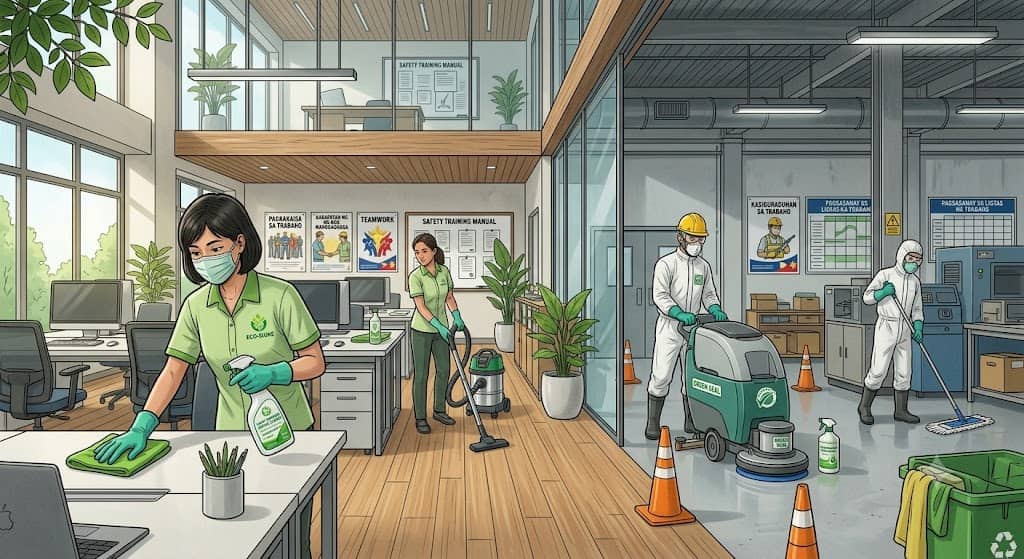
Traditional cleaning products can be effective at removing dirt, grease, and bacteria, but some formulations contain chemicals that require careful handling. Frequent exposure to strong cleaning agents may contribute to skin irritation, respiratory discomfort, or eye irritation if proper precautions are not followed. Eco-friendly cleaning experts often rely on products designed to reduce these risks while still delivering reliable cleaning performance. Some advantages of environmentally responsible cleaning products include:
- Lower levels of harsh chemical exposure
- Reduced strong odors and airborne irritants
- Improved indoor air quality during cleaning
- Biodegradable ingredients that reduce environmental impact
- Greater compatibility with sustainable workplace practices
Although every cleaning product should be used according to manufacturer guidelines and safety instructions, greener alternatives can contribute to healthier workplaces when combined with proper training and protective equipment.
Reducing unnecessary chemical exposure benefits not only cleaning professionals but also building occupants who use the space after cleaning has been completed.
Fair Labor Practices Strengthen the Cleaning Industry
Eco-friendly cleaning companies increasingly recognize that employee well-being directly influences service quality, customer satisfaction, and long-term business success. Strong labor practices may include:
- Fair wages and transparent compensation
- Reasonable working hours
- Ongoing professional training
- Access to protective equipment
- Safe working conditions
- Clear communication between management and staff
Training is particularly important as eco-friendly cleaning methods continue to evolve. Workers need to understand how to use environmentally responsible products correctly, follow sanitation procedures, and operate specialized equipment safely.
Investing in employee development helps improve both cleaning effectiveness and workplace safety while creating opportunities for career advancement within the industry.
Companies that prioritize their workforce often experience lower staff turnover, stronger customer relationships, and more consistent service quality.
Green Innovation Creates Better Working Conditions
Modern cleaning technology is helping improve both environmental performance and worker safety. Equipment manufacturers continue developing tools that reduce physical strain while increasing cleaning efficiency.
Examples include lightweight vacuum systems, microfiber cleaning technology, ergonomic mops, battery-powered equipment with lower noise levels, and automated floor-cleaning machines. In addition, environmentally responsible cleaning methods often encourage more precise product application.
Building a more Sustainable Future Together
Consumers play an important role in shaping the future of the cleaning industry. Many clients now consider not only whether a company uses environmentally friendly products but also how it treats its employees.
Organizations that publicly commit to responsible business practices often build stronger trust with customers who value ethical decision-making.
Governments, industry associations, employers, and customers all contribute to raising standards by encouraging practices such as:
- Responsible product selection
- Ongoing safety education
- Compliance with labor regulations
- Fair employment policies
- Continuous investment in worker well-being
As sustainability expectations continue to grow, successful cleaning companies will increasingly be those that demonstrate responsibility toward both environmental protection and employee welfare.
Strong Labor Laws Create Stronger Industries
Eco-friendly cleaning represents more than choosing biodegradable products or reducing chemical use. It reflects a broader commitment to creating healthier environments for everyone involved, including the professionals who perform this essential work every day.
By combining environmentally responsible cleaning methods with strong labor protections, fair employment practices, quality training, and modern equipment, the industry can build a future that supports both people and the planet.

- July 11, 2026

Invest Today!